Tube Telephone with Concreteable Support Post
Product Code: CNH-1410
Product Features:
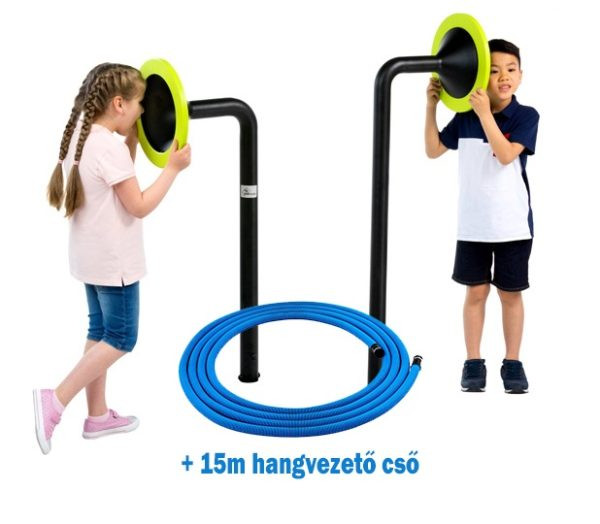
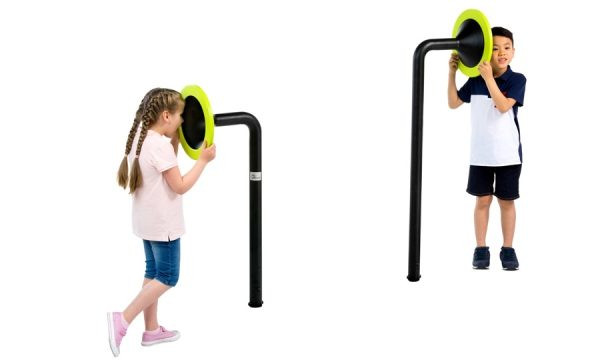
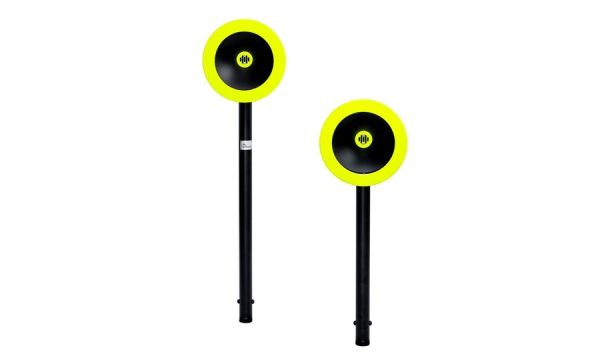
The Tube Telephone consists of two metal posts, each equipped with a sound-amplifying cone at the ends. The two ends are connected by a sound-conducting tube, so the sound transmitted on one side comes out on the other. This allows the children to communicate in a way that only they can hear each other. With this equipment, kids can also get familiar with the basics of acoustics.
We recommend using it as an accessory alongside outdoor musical instrument sets, but it can also serve as a unique attraction on any playground. It is perfectly suitable for kindergarten group activities and team-building games, making this simple play equipment highly versatile.
The product complies with MSZ EN 1176-1:2017 and EN 1176-07:2008 standards and comes with a playground conformity certificate.
Materials and Construction:
- 2 pcs HDPE amplifying cones
- 2 pcs powder-coated metal posts
- 15 m plastic sound-conducting tube, which allows flexible placement of the components within a distance of up to 15 meters.
The product is available only with ground anchors.
Installation:
The equipment must be installed with concrete foundations, suitable even for soft surfaces (grass, sand). The connecting tube should be laid in a trench of about 15–25 cm depth between the two posts and fixed to the designated openings of the sound posts. Ensure that concreting ends 40 cm below ground level.
Free space required: 9.3 m²
Related Documents:
PLAYGROUND MUSICAL INSTRUMENTS
Music. Play. Development.
5 reasons why making music has a positive impact on children’s development
It is a proven fact that learning to play musical instruments develops cognitive skills and has many beneficial effects on children’s growth. We have collected 5 key benefits of making music that can also be experienced through outdoor playground instruments:
Concentration and coordination – when playing an instrument, children must focus on several things at once: tempo, rhythm, melody, finding the correct notes, and the physical movements required. Singing can even be added to this process, creating a complex task that helps children learn to concentrate on multiple aspects simultaneously.
Memory skills – think of nursery rhymes and songs that children love to repeat even during play. These short, melodic word games are an essential part of early education because of their role in developing memory. This skill can be transferred into instrumental play, which can also be included in preschool or school group activities.
Creativity – an instrument invites children to create their own melodies, awakening their desire to invent. By playing instruments, children can express and unfold their creativity. Outdoor instruments are very easy to use, require no prior knowledge, and still allow for the creation of varied tunes. Being accessible anytime for anyone, they inspire experimentation and free play.
Social skills – playground instruments can be played by several children at the same time, whether on different instruments or together in duets. In any setup, the shared experience of creating music develops social competences, teaching children how to play in coordination and cooperation. Alongside individual achievement, social skills are strengthened.
Rehabilitation and integration – group music-making can play an important role in both rehabilitation and integration. The unifying and therapeutic power of music has long been known, and today more and more programs use shared music experiences to support individual rehabilitation and social inclusion.